
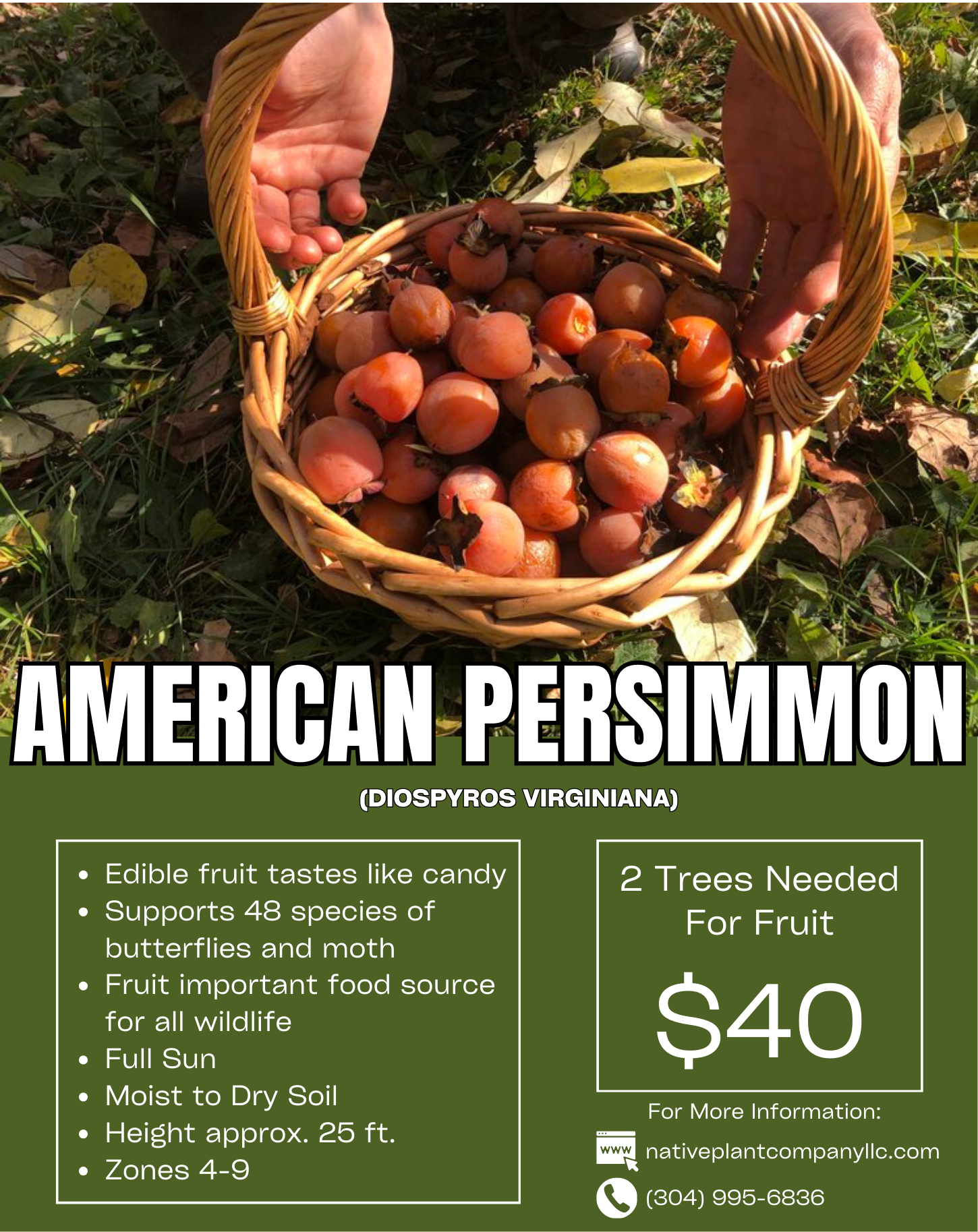

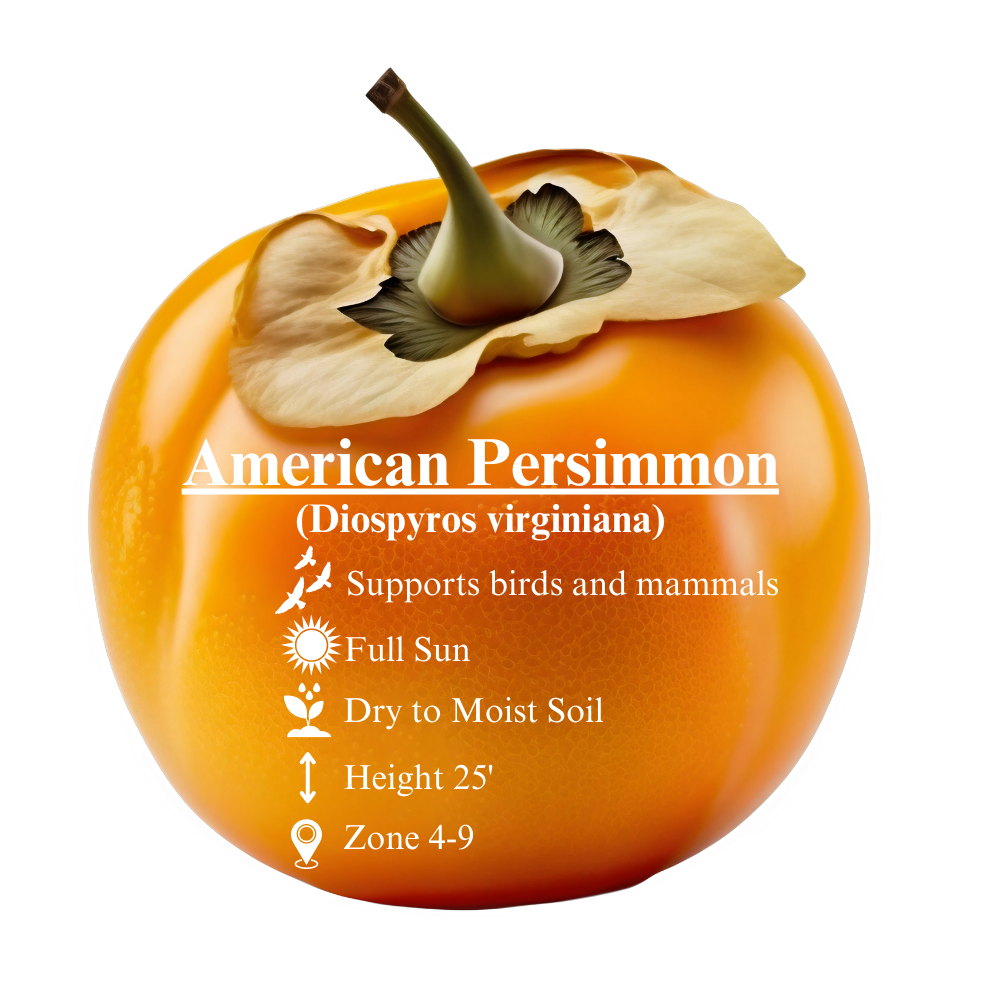
American Persimmon (Diospyros virginiana)
The Native Fruit Tree That Feeds Wildlife and People
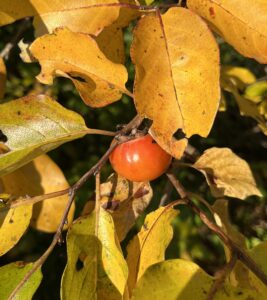
Few native trees offer as much value to wildlife, pollinators, and people as the American Persimmon.
Native to eastern North America, American Persimmon (Diospyros virginiana) produces sweet orange fruits in autumn that have fed wildlife, Indigenous peoples, and rural communities for centuries. Its rugged adaptability, beautiful fall color, and incredible wildlife value make it one of the most rewarding native trees a homeowner can plant.
At Native Plant Company, American Persimmon is one of our favorite native trees because it embodies our belief that when you plant native species, wildlife returns.
Plant it—and they will come.
Quick Facts
Scientific Name: Diospyros virginiana
Common Names:
- American Persimmon
- Common Persimmon
- Eastern Persimmon
Plant Type:
Deciduous native tree
Native Range:
Eastern and Central United States
Mature Height:
35–60 feet
Mature Width:
20–35 feet
Growth Rate:
Medium
Sun Requirements:
Full sun to partial shade
Soil Requirements:
Adaptable to clay, loam, and sandy soils
Soil Moisture:
Medium
USDA Zones:
4–9
Wildlife Value:
Extremely High
Edible Fruit:
Yes
Fall Color:
Yellow, orange, and gold
Why Plant American Persimmon?
It is one of the most wildlife-friendly trees native to the eastern United States.
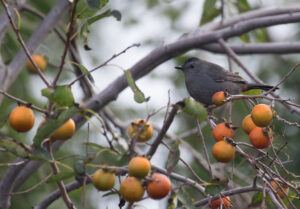
Its fruits persist into fall and winter when food sources become scarce. Birds, mammals, and insects all benefit from this remarkable tree.
Unlike many ornamental trees, American Persimmons provide real ecological value while remaining attractive in the landscape.
Benefits include:
- Delicious edible fruit
- Exceptional wildlife value
- Attractive fall color
- Adaptability to many soil types
- Drought tolerance once established
- Distinctive blocky bark
- Long lifespan
- Native to Pennsylvania and much of the eastern United States
My First Experience with an American Persimmon
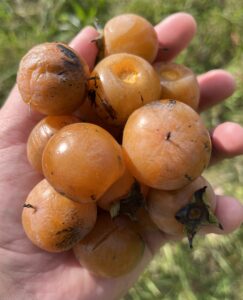
The first time I found an American Persimmon was while walking through the woods with my dog in late fall in Pennsylvania.
I remember seeing bright orange fruits hanging from a tree and thinking they looked like bulbs on a Christmas tree. It seemed strange to find fruit that color growing wild in a Pennsylvania forest.
Curious, I picked one that was fully ripe and tasted it.
I was shocked.
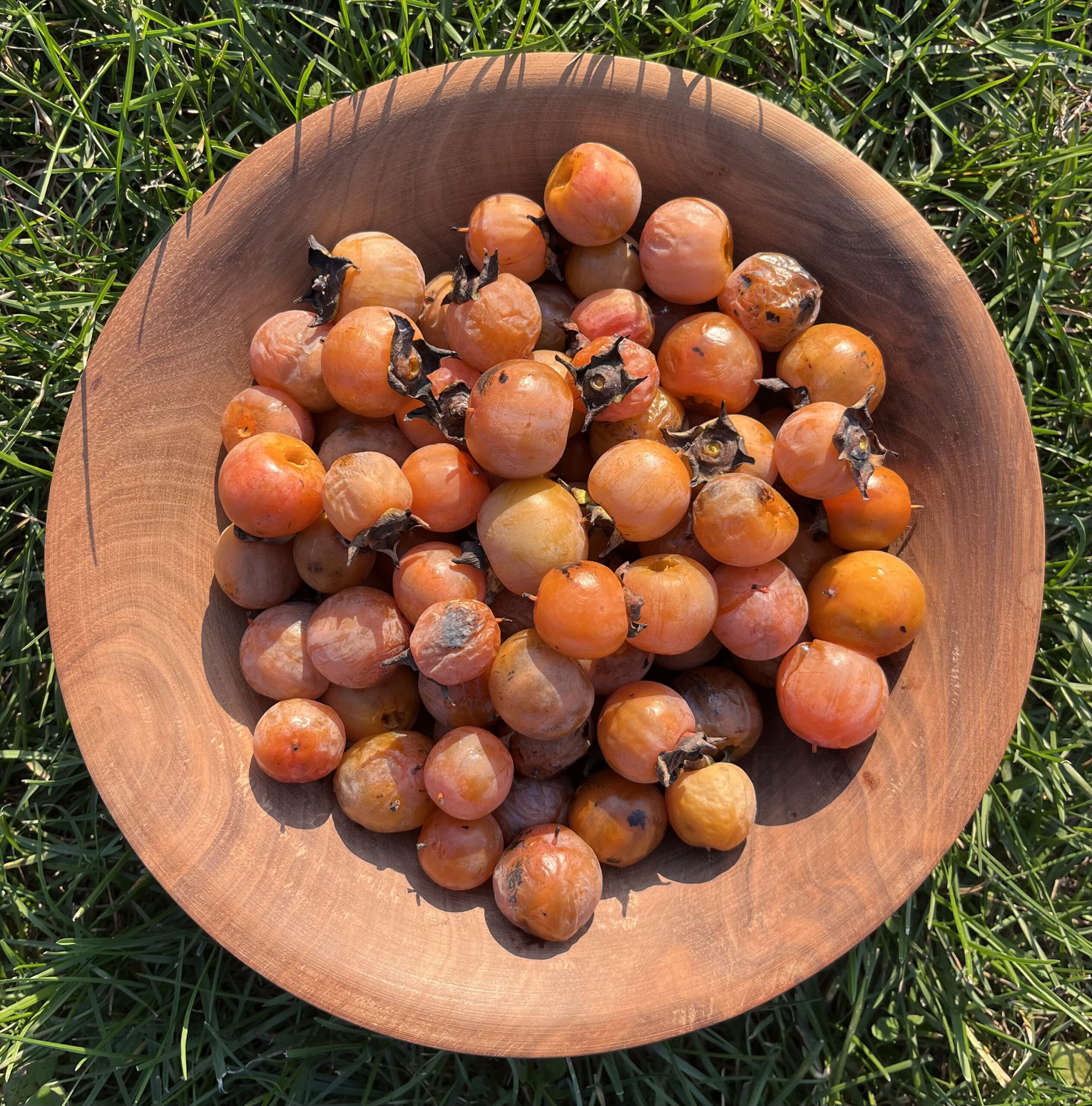
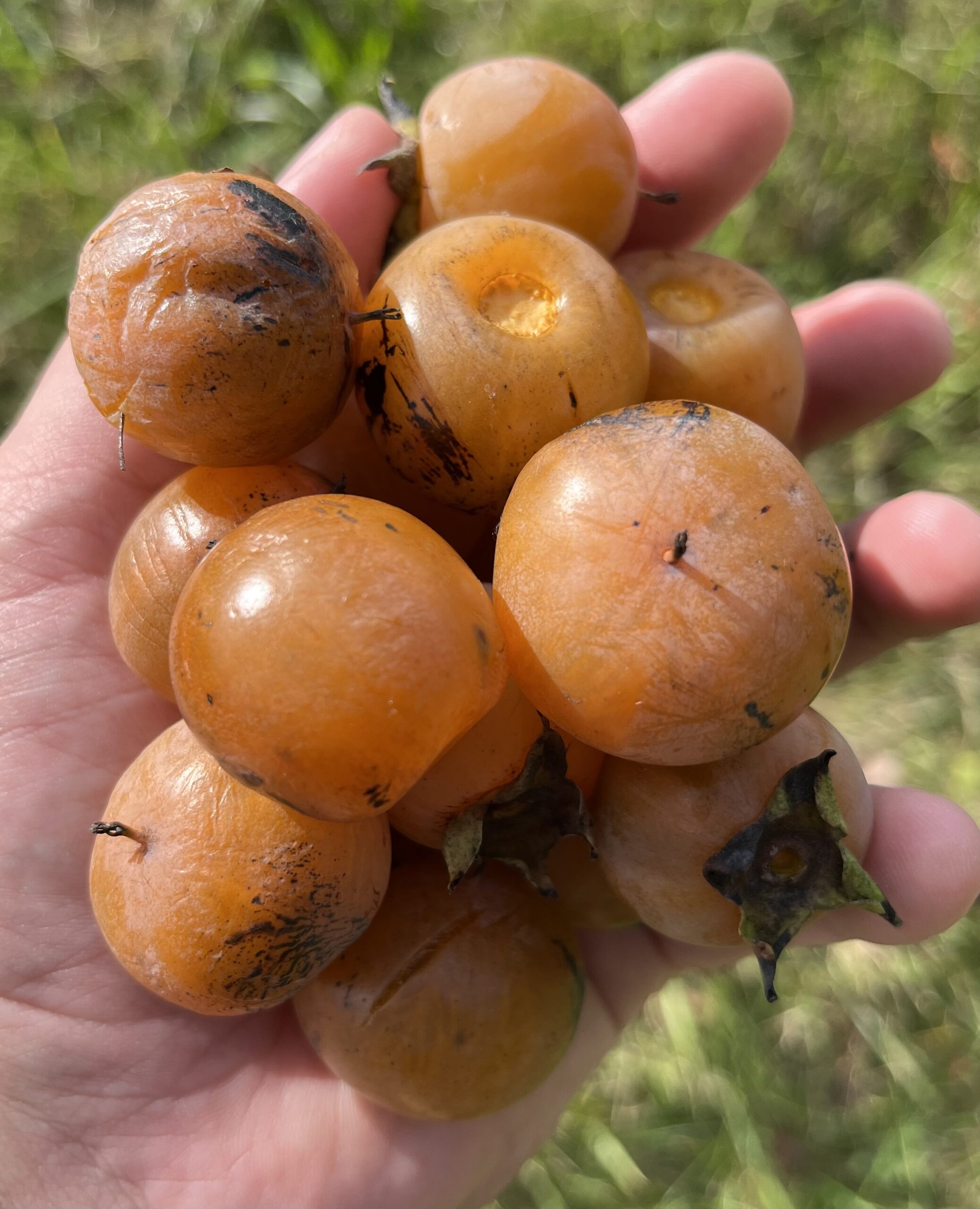
The fruit was incredibly sweet—far sweeter than I expected from a native tree growing untended in the woods. The flavor reminded me of honey, dates, and caramel. It instantly became one of my favorite native plants.
Today we grow American Persimmon because we believe more people should experience the surprise of discovering this remarkable native fruit for themselves.
Wildlife Value
American Persimmon is a true wildlife tree.
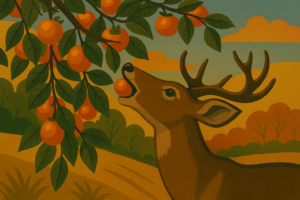
Its flowers support pollinators while its fruits provide food for dozens of bird and mammal species.
Birds That Eat Persimmon Fruit
- American Robin
- Cedar Waxwing
- Northern Mockingbird
- Eastern Bluebird
- Wild Turkey
- Northern Cardinal
- Gray Catbird
Mammals That Eat Persimmon Fruit
- White-tailed Deer
- Raccoon
- Virginia Opossum
- Red Fox
- Gray Fox
- Coyote
- Black Bear
- Eastern Gray Squirrel
- Flying Squirrel
Many animals actively seek out persimmon fruit after frost when sugars become concentrated.
Pollinator Value
Persimmon flowers attract:
- Native bees
- Honey bees
- Small beneficial insects
- Various pollinating flies
Although the flowers are small, they are an important nectar source during bloom.
What Does American Persimmon Fruit Taste Like?
A fully ripe fruit is among the sweetest fruits native to North America.
Unripe fruits contain high levels of tannins and can be intensely astringent. Once ripe, the fruit becomes soft and develops flavors often compared to:
- Apricot
- Date
- Caramel
- Honey
- Brown sugar
- Pumpkin custard
Many people consider ripe persimmons one of the finest native fruits available.
When Is American Persimmon Ripe?
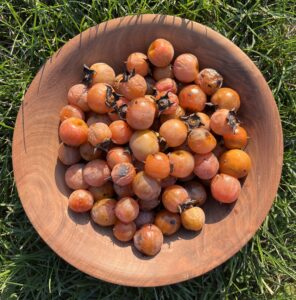
Persimmons typically ripen from September through November depending on location.
Fruit should not be harvested while firm.
The best fruits:
- Turn orange
- Become soft
- Almost fall off the tree
Many growers wait until after the first frost, although frost is not required for ripening.
Historical Uses

American Persimmons have a long history of use throughout eastern North America.
Indigenous peoples harvested and consumed the fruit long before European settlement.
Early American settlers used persimmons to make:
- Puddings
- Cakes
- Breads
- Preserves
- Beer
- Vinegar
One of the first written accounts comes from John Smith, who explored the Mid-Atlantic region in the early 1600s. Smith described the ripe fruits as being “as delicious as an apricot.”
He also offered a warning to anyone who picked them too early, writing that “if it be not ripe it will draw a man’s mouth awrie with much torment.”
More than four hundred years later, anyone who has accidentally bitten into an unripe persimmon knows exactly what he meant.
The wood was prized for its strength and durability.
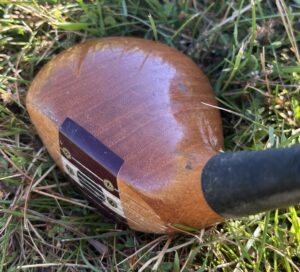
Persimmon wood was historically used for:
- Tool handles
- Textile shuttles
- Golf club heads
- Specialty woodworking
Growing Conditions
Sunlight
American Persimmon performs best in full sun.
While young trees tolerate partial shade, fruit production is greatest with at least six hours of direct sunlight daily.
Soil
American Persimmon adapts to:
- Clay soils
- Loam soils
- Sandy soils
It tolerates poor soils better than many fruit trees.
Water
Young trees benefit from regular watering during establishment.
Established trees become remarkably drought tolerant.
Salt Tolerance
Moderate.
Avoid planting directly adjacent to heavily salted roads.
Urban Conditions
American Persimmon performs surprisingly well in urban and suburban settings.
It tolerates:
- Heat
- Air pollution
- Compacted soils better than many native species
Male vs. Female Trees
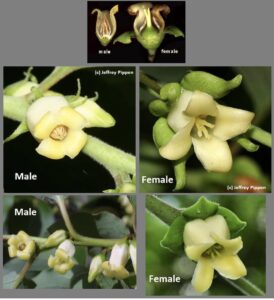
American Persimmon is usually dioecious.
This means male and female flowers typically occur on separate trees.
Do You Need Both?
For fruit production:
Yes.
A female tree generally requires a nearby male tree for reliable pollination and fruit production.
If your goal is wildlife habitat, planting multiple trees increases fruit production and ecological value.
How Fast Does American Persimmon Grow?
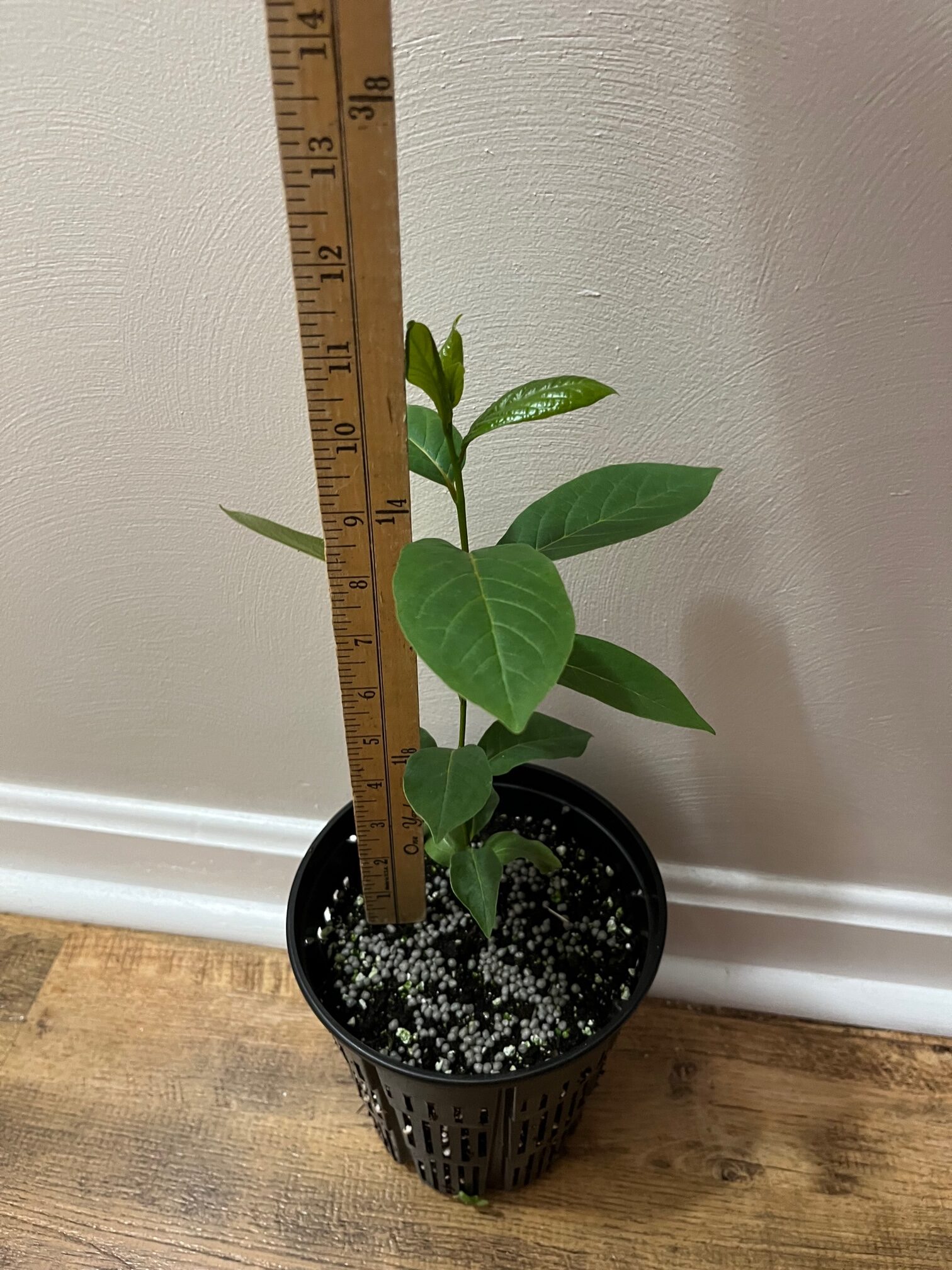
American Persimmon has a medium growth rate.
Typical growth:
1–2 feet per year under favorable conditions.
Trees often focus on root development during their first few years after planting.
Once established, growth becomes more vigorous.
Deer Resistance
American Persimmon is considered moderately deer resistant.
Young trees may require protection from browsing and buck rubbing.
We recommend tree tubes or fencing during establishment in areas with high deer populations.
Companion Plants
American Persimmon combines beautifully with other native species.
Recommended companions include:
- Spicebush (Lindera benzoin)
- American Plum (Prunus americana)
- Serviceberry (Amelanchier spp.)
- Pawpaw (Asimina triloba)
- Witch Hazel (Hamamelis virginiana)
- Eastern Redbud (Cercis canadensis)
- Sweetbay Magnolia (Magnolia virginiana)
Together these species create habitat, seasonal interest, and food resources for wildlife.
Seasonal Interest
Spring
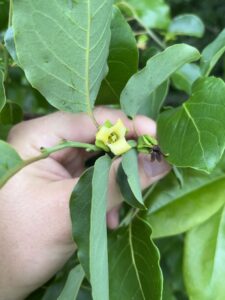
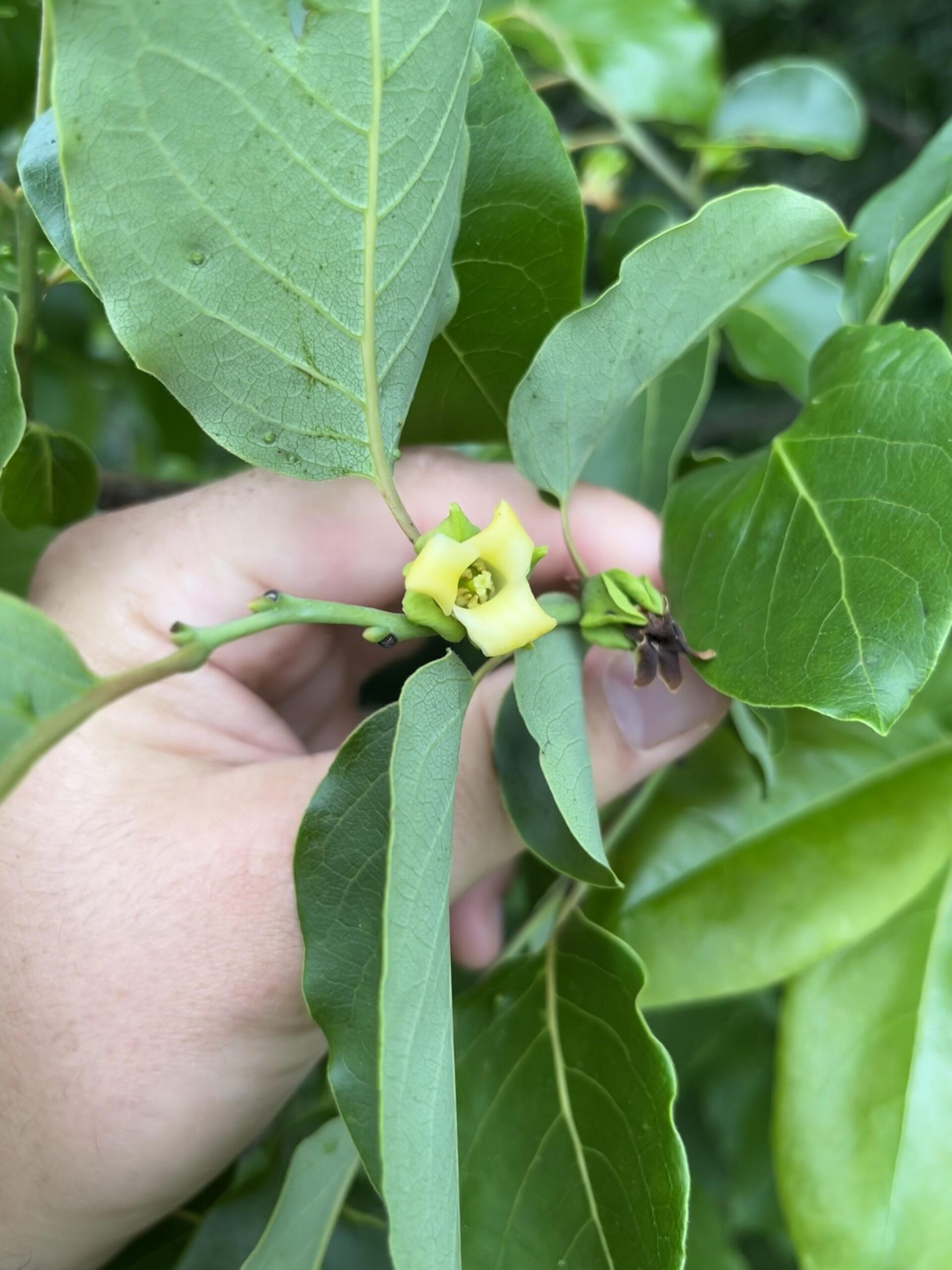
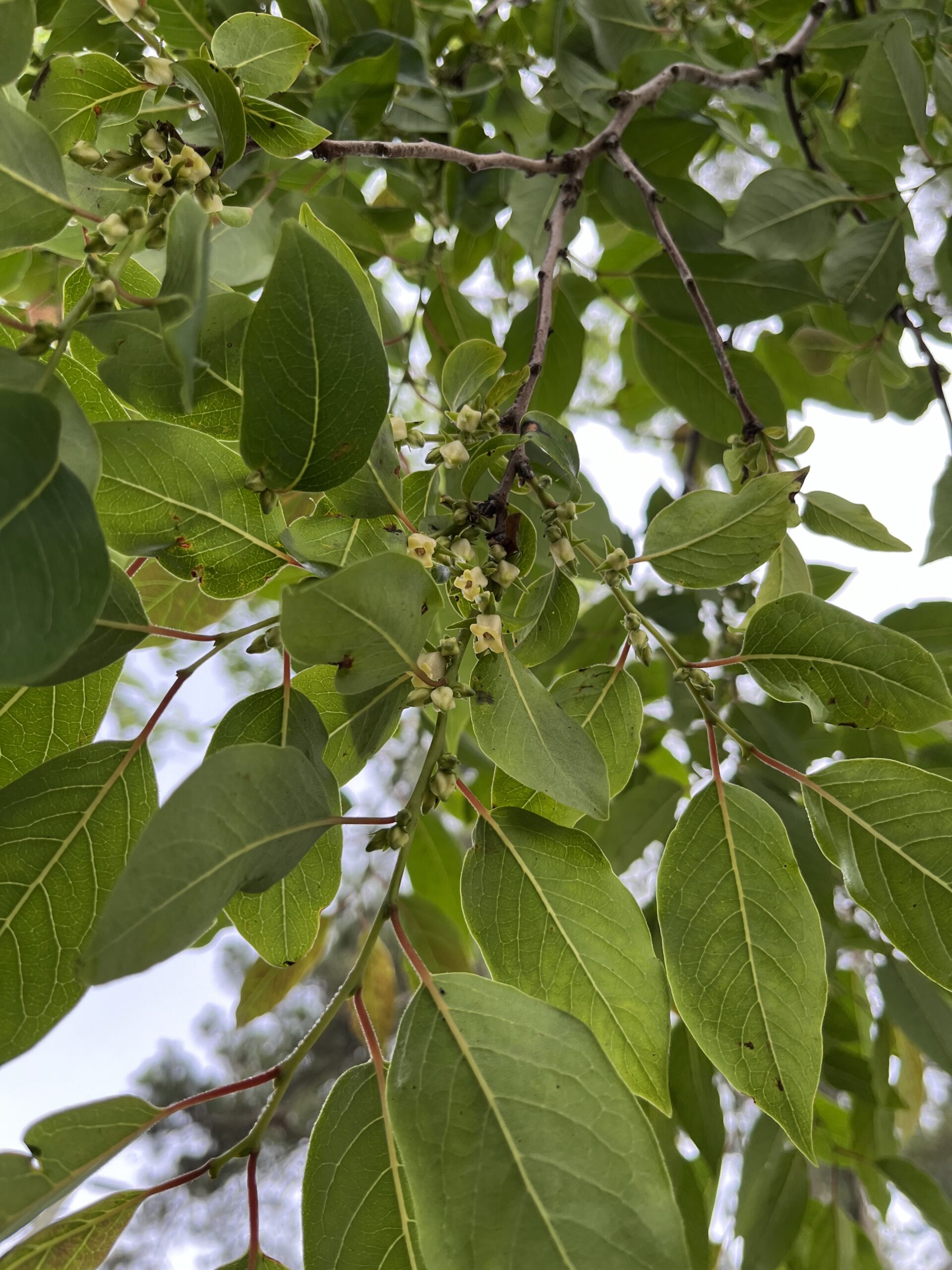
Small fragrant flowers emerge.
Summer
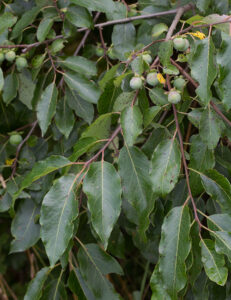
Dense green foliage provides shade and cover.
Fall
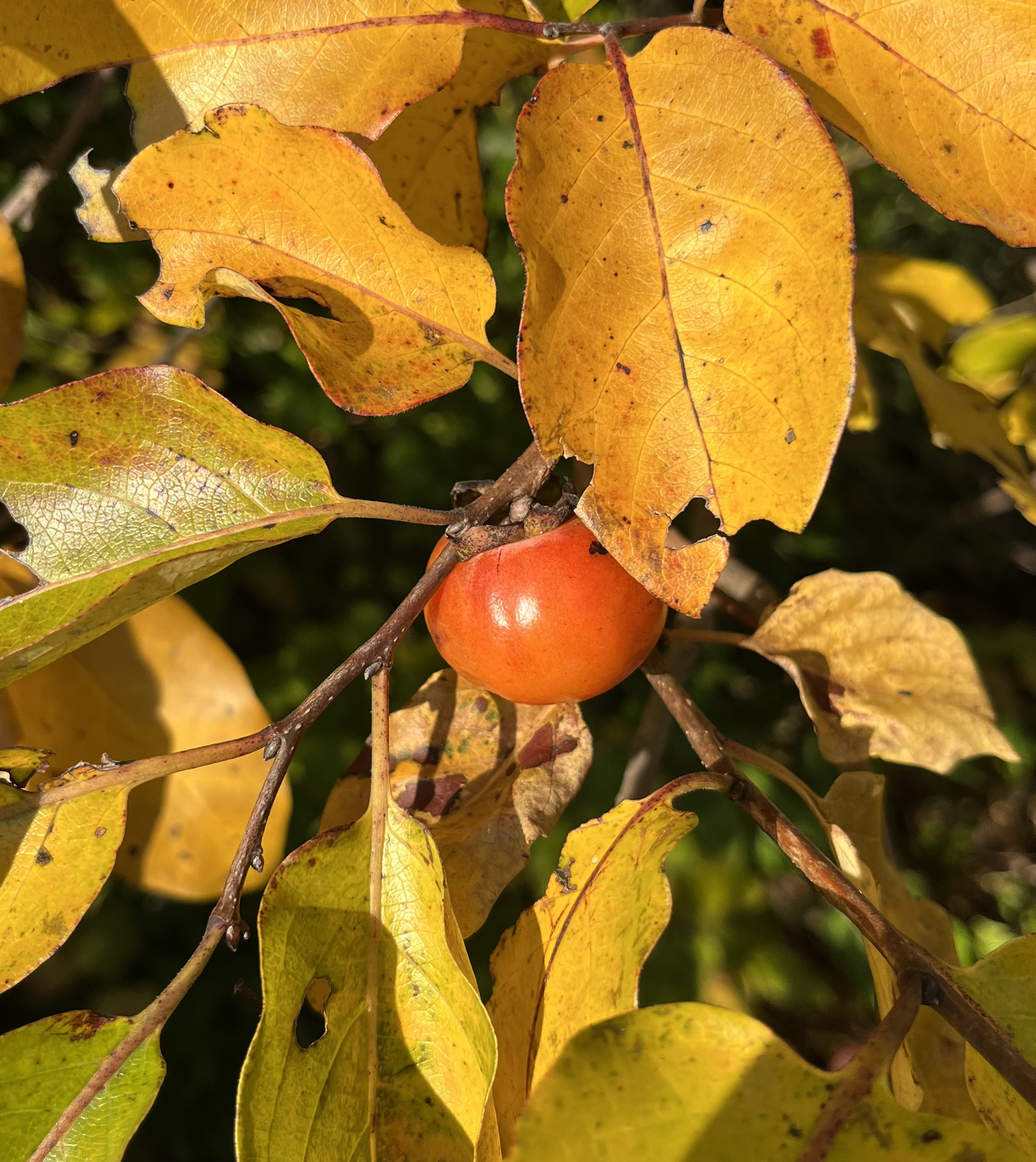
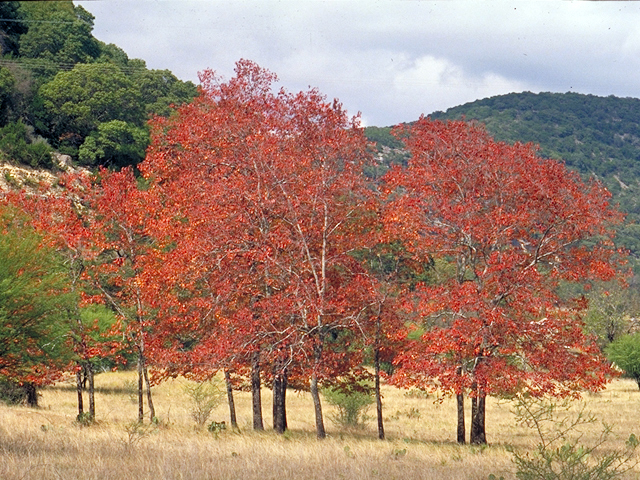
Brilliant yellow foliage combines with bright orange fruit.
Winter
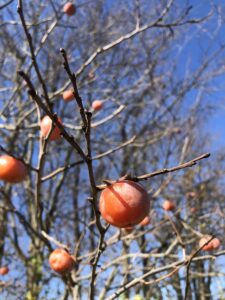
Distinctive bark and persistent fruit continue to provide visual interest and wildlife value.
Why We Grow American Persimmon
American Persimmon represents everything we love about native plants.
It feeds wildlife.
Feeds people.
Survives difficult conditions.
Tells an American story stretching back thousands of years.
If you have room for a medium to large native tree, American Persimmon deserves serious consideration.
Its fruit, beauty, and ecological value make it one of the finest native trees available for home landscapes.
Reviews
There are no reviews yet.